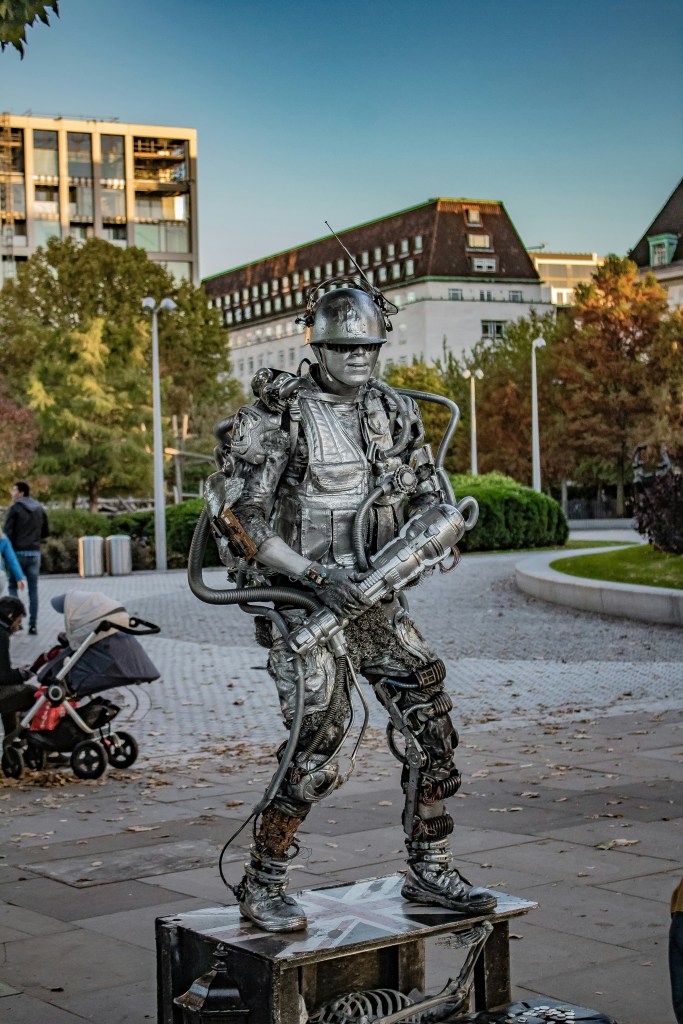
Photo from Ben Lodge on Unsplash
In the mid-twentieth century, after the devastation of Hiroshima and Nagasaki, the world took steps to prevent the most destructive weapons from ever being used again. The mushroom clouds that once darkened the skies over Japan left not only physical ruins but also a moral scar on humanity’s conscience, convincing leaders that certain lines of warfare should never again be crossed. By 1956, out of the ashes of that collective trauma, a fragile consensus emerged: tactical nuclear warheads smaller, battlefield-level weapons deployable from tanks, helicopters, or short-range artillery would be prohibited under global agreements. These weapons were seen not as tools of stability, but as dangerous temptations: arms too destabilizing to be confined to military logic, too easy to deploy in moments of desperation, and far too dangerous for humanity’s survival as a whole (Council on Strategic Risks, 2023). For decades, that taboo held firm, forming one of the unspoken guardrails of international security and reinforcing the idea that nuclear weapons belonged to the realm of ultimate deterrence, not practical battlefield strategy.
But history rarely stands still, and the boundaries that once seemed immovable have begun to shift. As warfare now enters an era defined by mechanization and automation, with robots, drones, and AI-guided systems increasingly central to military planning, the old taboos are once again being tested at their edges. The rapid rise of robotic and mechanized warfare introduces a new and disquieting dilemma for states that feel increasingly threatened by the pace of technological change. Machines that fight, adapt, and overwhelm on the battlefield raise questions no Cold War treaty ever anticipated. It is in this unsettling context that some analysts quietly speculate whether nations such as China or Russia faced with adversaries possessing superior technological infrastructures might one day consider, carefully, even secretly, revisiting tactical warheads as part of their deterrence strategies (Kristensen & Korda, 2019).
The logic, from a cold strategic standpoint, is unsettling but straightforward. Robotic warfare shifts the balance of power: fleets of autonomous drones or AI-driven armored vehicles could overwhelm traditional defenses without requiring large numbers of human soldiers. For states facing adversaries with technological superiority, the existence of tactical nuclear options might serve as a counterweight a reminder that even the most advanced robots are not invincible against the specter of nuclear escalation (Gartzke & Lindsay, 2019). In this sense, tactical warheads are imagined not as battlefield tools, but as psychological weapons: a deterrent against a future in which machines dominate combat.
Yet such considerations collide with layers of law, morality, and politics. The prohibition established in 1956 was not simply about weapons, but about drawing a line in human history. Tactical warheads blur the boundary between conventional and nuclear warfare. Their smaller size and “usable” nature increase the temptation for deployment in moments of desperation. And in an age of rapid escalation, even a limited strike could spiral into global catastrophe. What begins as a tactical maneuver against machines could end as a strategic disaster for humankind (Council on Strategic Risks, 2023; Kristensen & Korda, 2019b).
International law remains clear: nuclear weapons, tactical or otherwise, fall under regimes of prohibition and limitation, from the Nuclear Non-Proliferation Treaty to the Treaty on the Prohibition of Nuclear Weapons (United Nations Office for Disarmament Affairs, 2020). To reintroduce them, even in whispers or as hidden doctrine, would undermine decades of progress and invite a dangerous arms race. If one state were suspected of reviving battlefield warheads, others would likely follow, creating a cascade of mistrust and escalation (Federation of American Scientists, 2025).
Still, the temptation exists because robotic warfare itself is destabilizing. Unlike traditional armies, machines can be produced in vast numbers, deployed without domestic political costs, and destroyed without human casualties. This lowers the threshold for conflict, making wars easier to start and harder to end. Against such a backdrop, the allure of “ultimate deterrence” reemerges, however dangerous or forbidden it may be. The ghost of tactical warheads lingers not because they are rational choices, but because fear and insecurity push states to reconsider even the most perilous tools.
The challenge for the international community is to confront this tension before it becomes reality. That means adapting arms control frameworks to account for robotic warfare, strengthening norms that separate conventional from nuclear, and investing in diplomacy that reduces the perceived need for such extreme measures. The lesson of 1956 still stands: once certain weapons enter the battlefield, they are nearly impossible to control. The global experience of the nuclear age has shown that once a barrier is crossed, it cannot easily be rebuilt; political will erodes, mistrust spreads, and security spirals out of balance.
The idea of returning to tactical warheads is not an announcement of policy, but a warning of possibility. It reflects not certainty, but fear: fear of technological asymmetry, fear of strategic irrelevance, and fear of machines waging wars beyond human limits. In the shadows of robotic warfare, old taboos may flicker back to life, tempting leaders to treat them as tools of balance rather than remnants of a darker past. The question is whether humanity has the wisdom to resist them, or whether fear of machines will tempt us to reopen the nuclear box we once swore never again to touch. If restraint falters, the price will not only be measured in strategic advantage but in the fragile trust that underpins the global order trust that, once broken, may take generations to repair.
References
Council on Strategic Risks. (2023, August 1). Ending tactical nuclear weapons: A brief history and … Council on Strategic Risks. https://councilonstrategicrisks.org/2023/08/01/ending-tactical-nuclear-weapons/
Federation of American Scientists. (2025). Status of world nuclear forces. Federation of American Scientists. https://fas.org/initiative/status-world-nuclear-forces/
Gartzke, E., & Lindsay, J. R. (2019). Weaving tangled webs: Offense, defense, and deception in cyberspace. Security Studies, 28(3), 458–481. https://doi.org/10.1080/09636412.2019.1604983
Kristensen, H. M., & Korda, M. (2019a). Tactical nuclear weapons, 2019. Bulletin of the Atomic Scientists, 75(5), 252–261. https://doi.org/10.1080/00963402.2019.1654273
Kristensen, H. M., & Korda, M. (2019b). Tactical nuclear weapons, 2019. Bulletin of the Atomic Scientists. https://thebulletin.org/2019/08/tactical-nuclear-weapons-2019/
United Nations Office for Disarmament Affairs. (2020). Treaty on the Prohibition of Nuclear Weapons. United Nations https://treaties.un.org/pages/ViewDetails.aspx?src=TREATY&mtdsg_no=XXVI-9&chapter=26
 Gratify Gravity