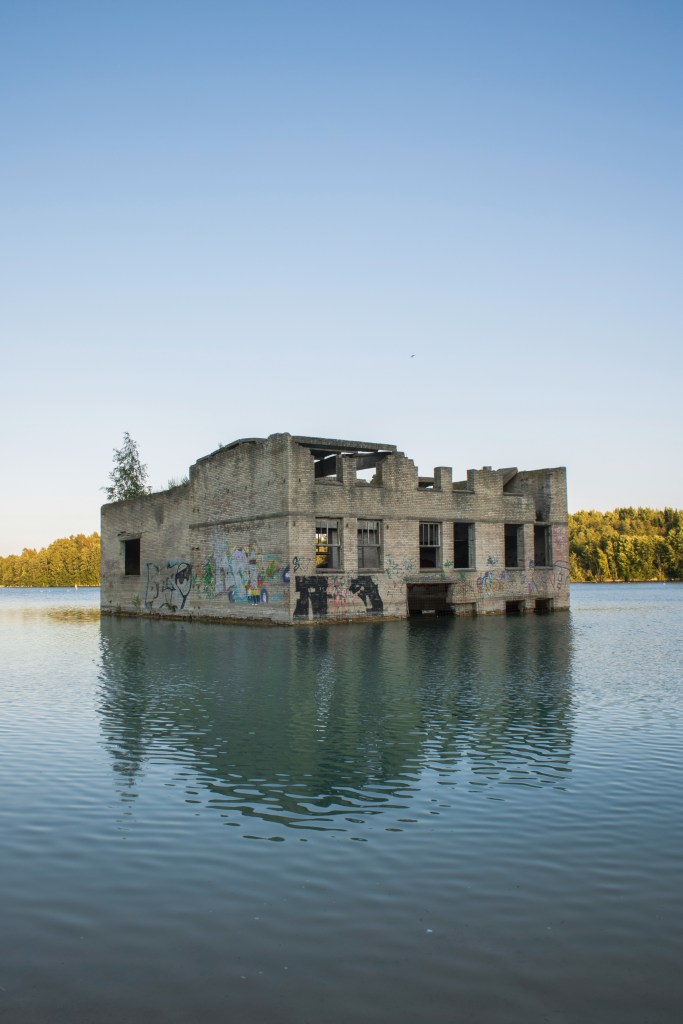
Photo From Julius Jansson On Unsplash
When we imagine the consequences of rising seas, the images that usually come to mind are flooded streets, disappearing beaches, or displaced families. But hidden beneath those headlines lies a quieter crisis one that strikes at the very foundations of international order. If entire countries sink beneath the waves, what happens not just to their land, but to their voices in the United Nations?
For nearly a century, international law has clung to a simple definition of what makes a state: a population, a government, the ability to engage with others, and crucially a defined territory (Montevideo Convention, 1933). But climate change is tearing at that final requirement. Rising seas challenge the assumption that sovereignty is tied to soil. What happens when there is no land left to stand on, but a people and a government still exist?
This is no longer an abstract question for legal scholars; it is a looming reality. Some argue that nations can survive without land, shifting their institutions online or abroad, becoming what might be called “deterritorialized states.” Rothe et al. (2024) suggest that digital sovereignty could be a way forward a state reborn in cyberspace. Others remain skeptical: can the international community truly recognize a nation that exists only on servers and in memory?
The problem extends far beyond definitions. Every state, no matter its size, currently holds a vote in the UN General Assembly. That equality is symbolic one voice among nearly two hundred but it matters. Each ballot cast represents not just the power of a government but the dignity of a people. If states disappear under water, so too might their votes. The loss would not just redraw maps; it would redraw the balance of power in global decision-making.
This raises profound moral questions. Those most at risk of vanishing are the ones least responsible for the emissions driving climate change. To strip them of political existence would mean compounding injustice with silence. Corneo and Scherer (2025) argue that international law may soon be forced to evolve, spurred by recent advisory opinions from the International Court of Justice. Yet law alone may not be enough. Recognition is ultimately a political choice one that depends on whether other states are willing to acknowledge a nation without land.
The silence is not only political. It is personal. For communities facing the erasure of their homelands, the stakes are not merely about flags or seats in a hall in New York. It is about passports, citizenship, and belonging. Without a recognized state, people risk slipping into a legal void, becoming stateless in a world that measures rights through nationality. It is about culture and continuity too: whether languages, traditions, and identities can survive once the soil that anchored them is gone.
This is why the vanishing votes dilemma cuts so deep. It forces the international community to ask whether statehood is an unyielding legal formula or a living principle that must adapt to an era of climate upheaval. Do we let the rising seas decide who counts as a country, or do we redefine sovereignty to preserve voices that might otherwise be drowned out?
The oceans are rising. The questions are rising with them. If the world does not find answers soon, we may watch nations vanish twice: once beneath the waves, and again in the silence of their absence from the global stage.
References
Corneo, A., & Scherer, J. (2025, August 20). Is Montevideo sinking? “Disappearing” states and de-territorialized statehood following the ICJ’s advisory opinion on climate change. Columbia Law School Blog. https://blogs.law.columbia.edu/climatechange/2025/08/20/is-montevideo-sinking-disappearing-states-and-de-territorialized-statehood-following-the-icjs-advisory-opinion-on-climate-change/
Montevideo Convention on the Rights and Duties of States. (1933). International treaty. Organization of American States. https://www.oas.org/juridico/english/treaties/a-40.html
Rothe, D., Boas, I., Farbotko, C., & Kitara, T. (2024). Digital Tuvalu: State sovereignty in a world of climate loss. International Affairs, 100(4), 1491–1509. https://doi.org/10.1093/ia/iiae143
 Gratify Gravity