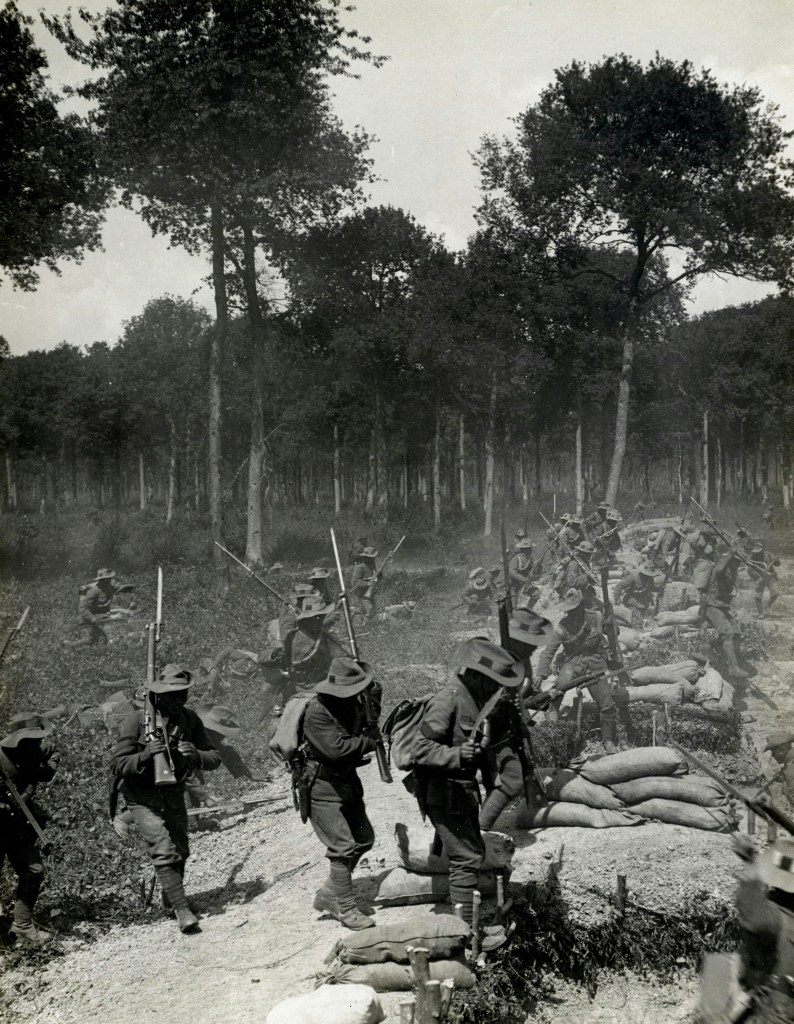
Photo from British Library on Unsplash
What Is a “World War”?
The term “World War” is generally used to designate the two major conflicts of the 20th century: World War I (1914–1918) and World War II (1939–1945). This category typically encompasses criteria such as the involvement of numerous nations across multiple continents, the wide scale use of military mobilizations, and political, economic, and social consequences within large scale war developments. Nevertheless, several historians have raised the question of whether an earlier conflict might also be classifiable as a world war?
One conflict frequently discussed in this question is the Napoleonic Wars (1803–1815). Lasting for more than a decade. This war involved most of the major powers of Europe and exerted far-reaching influence across the Americas, Africa, and Asia. Charles Esdaile (2007) described the Napoleonic Wars as one of the most complex international conflicts prior to the 20th century, given its involvement of diverse actors across continents with layman interests.
Alexander Mikaberidze (2020), in his work The Napoleonic Wars: A Global History, emphasized that the conflict cannot be understood solely as a European war. Accordingly, its consequences extended into global trade networks, colonial dynamics, and the emergence of independence movements within Latin America. This perspective highlights that the Napoleonic Wars contained characteristics that closely resemble the modern understanding of a “world war check list.”
Several key features support the view. First, the conflict extended multiple Continents. While the main battles occurred in Europe, the consequences extended to the Caribbean, the Atlantic sea lanes, and South Asia. Second, the War had international economic repercussions. Rourke (2006) noted that global commodity prices were disrupted, and neutral nations, such as the United States suffered grain losses of 5–6 percent annually, while France itself lost 3–4 percent. Third, there was a dimension of social mobilization. David A. Bell (2014) described the Napoleonic Wars as the First global war because it involved large scale military tactics, primary raw goods economies, industries, and political ideologies as a charismatic whole.
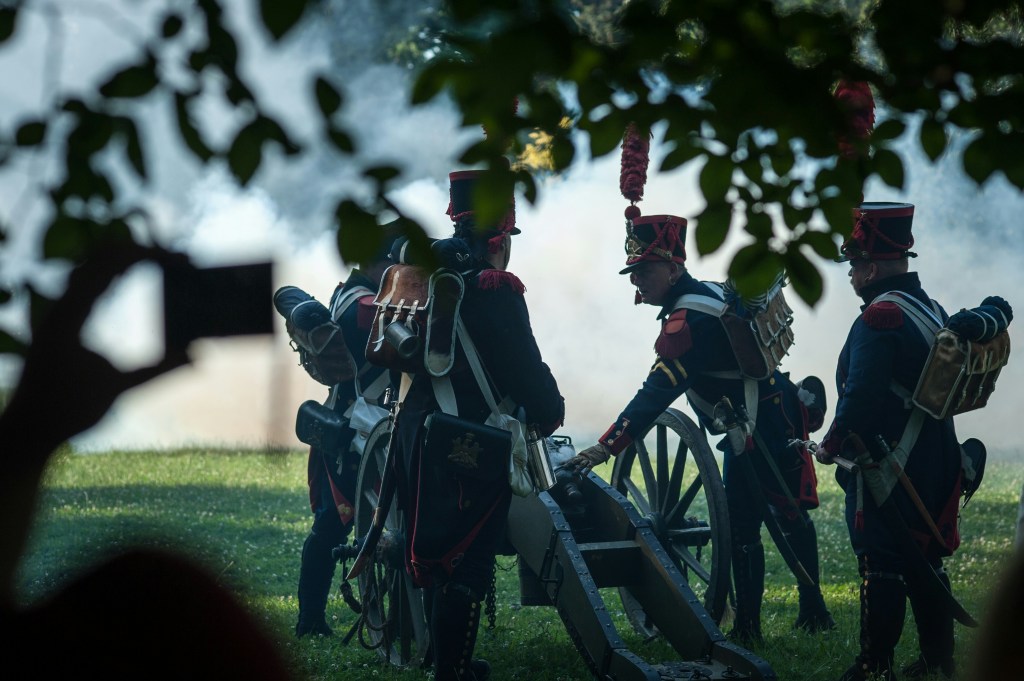
Photo: Elimende Inagella on Unsplash
The Background of the French Revolution and the Rise of Napoleon
The Napoleonic Wars have roots in the French Revolution (1789), a political and social upheaval that overthrew the French monarchy and established a new order based on citizenship, individual rights, and Republic based nationalism. T.C.W. Blanning (1996) emphasized that the Revolution created a new pattern of warfare, in which states fought in the interests of the people rather than family rule. This shift enabled military mobilization on a scale unprecedented in 18th-century Europe.
Within this context, Napoleon Bonaparte uniquely emerged. Born in Corsica to a modest family, he capitalized on the opportunities created by the collapse of the monarch order. William M. Sloane (1896), in The Life of Napoleon Bonaparte, portrayed him as both a military genius and a political figure who fused military strategy with revolutionary ideals.
John S. C. Abbott (1855) highlighted Napoleon’s dual role as a military leader and political figure. He reorganized the French government while simultaneously extending its influence across Europe. Thus, warfare during this era was not merely military conflict but also a vehicle for spreading revolutionary ideas.
Esdaile (2007) noted that nearly all major European powersincluding Britain, Austria, Russia, and Prussiajoined various coalitions against France. This made the Napoleonic Wars not simply bilateral conflicts but truly multilateral struggles with international resonance.
Michael Broers (2014) described Napoleon as a “soldier of destiny,” a figure who saw himself as part of a larger historical mission. In this framework, Napoleon functioned both as the heir to the French Revolution and as the architect of a transnational military conflict.
Thus, the French Revolution provided the ideological foundation for mass mobilization, while Napoleon gave it practical expression through expansive military leadership. The combination of these two elements produced a conflict of international scope, which some historians argue bore the earliest characteristics of a world war.
The Global Scale and International Impact of the Napoleonic Wars
The Napoleonic Wars (1803–1815) are regarded as one of the most extensive conflicts of the early 19th century. Although the central battlegrounds were in Europe, the war’s effects reached various regions worldwide. Alexander Mikaberidze (2020), in The Napoleonic Wars: A Global History, stressed that the war influenced Atlantic trade routes, Caribbean colonies, Latin America, and even India.
A key feature of this conflict was the Continental Blockade declared by Napoleon in 1806 as a strategy to weaken Britain. Kevin O’Rourke (2006) demonstrated that this policy had significant economic repercussions, including rising international commodity prices and declining welfare across multiple nations. Even neutral states such as the United States experienced annual losses of 5–6 percent of income, while France itself suffered losses of 3–4 percent per year.
In the Americas, the war weakened Spain’s authority and opened the door for independence movements within its colonies. Matthew Brown (2010), in The Birth of Latin American Nations, argued that the Napoleonic Wars accelerated the creation of new states in Latin America.
Maritime conflict was another key dimension. Andrew Lambert (2012) explained that Anglo-French rivalry spread across the Atlantic and contributed to the War of 1812 between Britain and the United States. As a result, international trade routes and the global maritime balance of power were profoundly affected.
Several European port cities such as Danzig and Hamburg suffered severe economic losses due to the blockade, as noted by Alan Forrest and Alexander Grab (2003). To safeguard its trade, Britain expanded its influence into India and Southeast Asia. The war’s effects also reached Asia, although to a lesser degree than in Europe and the Americas.
Beyond politics and economics, the war left a cultural legacy. Leo Tolstoy (1888), in The Physiology of War, depicted Napoleon’s invasion of Russia as a major human tragedy, while John T. Wilson (1969) noted that 19th-century English literature frequently referenced experiences from the Napoleonic Wars. Esdaile (2007) concluded that the conflict of 1803–1815 had universal implications, transcending the boundaries of continental warfare.
Total Mobilization and the Features of “Modern War”
The Napoleonic Wars are also notable for an unprecedented level of military and social mobilization. David A. Bell (2014), in The First Total War, described this era as the beginning of the concept of total wara conflict that engaged the entire resources of a state, including its military, economy, and ideology.
This phenomenon can be traced back to the French Revolution, particularly the levée en masse of 1793. Blanning (1996) noted that this policy required male citizens to serve in the armed forces, raising French troop numbers into the hundreds of thousands. Under Napoleon, this mobilization system became the foundation of his military power.
Broers (2014) emphasized that Napoleon fused military mobilization with revolutionary ideology. Soldiers fought not only for monarchy but for the nation itself. This gave the conflict an ideological character and engaged society at large.
The consequences of this mass mobilization extended deeply into the economy and social fabric of Europe. Forrest and Grab (2003) demonstrated that many industrial cities transformed into hubs of wartime production, with industries adapting their output to serve the demands of the military. Textile mills supplied uniforms, ironworks produced cannons and rifles, and shipyards expanded to accommodate the naval arms race. This process not only accelerated the growth of specific industrial sectors but also changed patterns of labor organization, as more workers were drawn into war-related industries. In some cases, women and children became increasingly involved in production, foreshadowing the broader mobilization of labor seen in the 20th century. Moreover, financial systems were stretched to their limits: new taxation schemes, war bonds, and credit arrangements became essential to sustaining campaigns that spanned multiple continents. These mechanisms created long-term fiscal consequences, reshaping state economies and establishing practices that would become integral during World War I and II.
Napoleon himself became a symbolic figure whose image extended beyond his military conquests. John S. C. Abbott (1855) portrayed him as a heroic and almost mythical leader, embodying the aspirations of a new Europe shaped by meritocracy and revolutionary ideals. William M. Sloane (1896), however, emphasized the broader societal transformations caused by his wars: the rise of new administrative systems, extended working hours in wartime industries, the imposition of heavy taxation, and a growing reliance on state authority to manage resources and populations. Beyond these practical effects, Napoleon’s image was carefully constructed through propaganda, art, and the press. Paintings by Jacques-Louis David and other artists depicted him as a modern Caesar, while official bulletins glorified his victories and downplayed defeats. This deliberate shaping of his public persona not only reinforced his authority in France but also left a lasting cultural imprint across Europe. In this sense, Napoleon’s role transcended that of a commander; he was a symbol of the merging of war, politics, and culture, a precedent that foreshadowed the cults of personality surrounding later leaders in the 20th century.
The mobilization was not confined to France and continental Europe. Britain, in its struggle against France, reinforced both military recruitment and its naval power. Lambert (2012) highlighted that Britain’s maritime dominance was crucial to maintaining global trade routes.
With these features, historians such as Esdaile (2007) have regarded the Napoleonic Wars as a milestone in the development of modern warfare, where conflict was no longer confined to military elites but became a phenomenon that engaged entire societies.
Global Economic Impact of the Napoleonic Wars
The Napoleonic Wars (1803–1815) exerted a profound influence on the global economy. Kevin H. O’Rourke (2006) noted that the conflict caused major disruptions to international trade, commodity prices, and the overall welfare of both belligerent and neutral nations. The United States, as one of the neutral powers, suffered an annual welfare decline of 5–6 percent due to the instability of maritime trade routes.
Napoleon introduced the Continental System in 1806, a policy designed to weaken Britain by cutting off its access to European markets. David A. Bell (2014) described this policy as one of the largest economic experiments of its time. Its effects were twofold: while it constrained some aspects of Britain’s economy, it also triggered recession in many European port cities. Smuggling flourished, and several of France’s allies experienced severe economic downturns.
Britain, as the dominant maritime power, managed to withstand the blockade. Andrew Lambert (2012) emphasized that Britain’s naval supremacy allowed it to maintain trade with the United States, India, and its colonies in Asia. This maritime advantage even contributed to the outbreak of the War of 1812 with the United States, a conflict often viewed as connected to the larger Napoleonic struggle.
The economic effects were also visible in port cities such as Danzig and Hamburg. Alexander Grab (2003) demonstrated that these cities suffered a collapse in trade activity and lost much of their economic vitality as a result of the blockade. Shortages of essential goods and raw materials also strained local populations.
Overall, the Napoleonic Wars revealed how military conflict could trigger economic crises with far-reaching, cross-continental consequences. Their effects extended into Latin America, Asia, and North Africa, making them one of the earliest examples of a global economic crisis directly tied to warfare.
Geographical Scope of the Conflict
The Napoleonic Wars were not confined to Europe but extended across a vast geographical scale. Alexander Mikaberidze (2020), in The Napoleonic Wars: A Global History, emphasized the conflict’s close connection with political and military developments in Africa, Asia, the Americas, and even the Pacific.
In the Caribbean, French and British colonies became central theaters of naval warfare as both powers sought control over sugar trade routes, a vital commodity of the period. C. E. Esdaile (2007) recorded that Britain’s naval dominance deprived France of many of its strategic colonies, severely weakening its global influence.
In Latin America, Spain’s weakened position due to its involvement in the European war created opportunities for independence movements. Matthew Brown (2010) noted that leaders such as Simón Bolívar capitalized on Spain’s vulnerability, enabling the formation of new nation-states in Venezuela, Argentina, and Mexico.
The war also had repercussions in Asia. Britain consolidated its presence in India, citing the need to protect trade routes from possible French interference. Naval conflicts in the Indian Ocean and near China further influenced the flow of trade between Asia and Europe.
With operations and consequences spanning at least three continents, the Napoleonic Wars demonstrated the characteristics of an international conflict well before the 20th century. This global scope makes them relevant in discussions about the early evolution of world warfare.
Photo from Suzy Brooks on Unsplash
Social and Military Mobilization on a Large Scale
The Napoleonic Wars were marked by unprecedented levels of social and military mobilization. T. C. W. Blanning (1996) explained that before the French Revolution, European armies were generally composed of mercenaries and small professional forces. The revolution introduced the concept of the levée en masse, or mass mobilization of citizens for national defense.
Napoleon Bonaparte expanded this concept by building an army that, at its height, mobilized over one million soldiers. Michael Broers (2014) highlighted that Napoleon’s forces were transnational in character, incorporating Italians, Germans, Poles, and Dutch, thus demonstrating the broad scope of his military apparatus.
David A. Bell (2014) argued that the wars reflected the early features of “total war” in modern history, as civilian contributions in the form of taxation, logistical support, and propaganda became integral to the war effort. William Milligan Sloane (1896), in his biography of Napoleon, described the physical and psychological hardships endured by soldiers, including long marches, limited supplies, and relentless campaigns.
This large-scale mobilization reshaped economies as well. Forrest and Grab (2003) observed that numerous European industrial centers were transformed into hubs of war production. As a result, warfare became an economic drivera model later repeated during World Wars I and II. The mobilization of society for war, pioneered under Napoleon, is therefore regarded as a turning point in the development of modern military systems.
Geopolitical Consequences and a New World Order
Napoleon’s defeat at the Battle of Waterloo in 1815 brought profound geopolitical consequences. Charles Esdaile (2007) argued that it marked the end of French dominance in Europe. In its aftermath, the Congress of Vienna was convened to restore political balance across the continent.
Alan Forrest and Alexander Grab (2003) noted that the Congress of Vienna produced the “Concert of Europe,” a diplomatic system among Austria, Russia, Prussia, and Britain designed to preserve political stability. This arrangement is often viewed as an early model of multilateral international governance.
Beyond Europe, the wars accelerated the independence of Latin American nations. Brown (2010) emphasized that Spain’s weakened position created opportunities for revolutionary leaders such as Simón Bolívar to secure independence for their colonies.
Cain and Hopkins (2014) argued that Britain gained substantial strategic advantages from the wars, expanding its colonial empire and consolidating its hegemony over global trade. The postwar period is frequently described as the Pax Britannica, an era of British dominance in international affairs.
Anthony Horne (1997) described the 19th century as an era fundamentally shaped by Napoleon’s downfall, particularly through the rise of nationalism, the redrawing of territorial boundaries, and the emergence of modern political ideologies such as liberalism and conservatism.
Cultural and Literary Dimensions
The Napoleonic Wars also had a profound influence on culture, art, and literature. Napoleon himself became a recurring subject in historical narratives, biographies, and fiction.
Leo Tolstoy (1888), through The Physiology of War: Napoleon and the Russian Campaign, offered a critical perspective on the war. Tolstoy emphasized its human dimension, portraying the suffering of civilians, the devastation of entire regions, and the limitations of Napoleon’s military strategies. His work viewed war not merely as a military phenomenon but as a social catastrophe that produced collective trauma. Through a philosophical lens, Tolstoy highlighted how both physical and psychological destruction in Russia reflected the broader impact of war on daily life.
Alexandre Dumas (1866), in Napoléon, presented a contrasting narrative. Dumas depicted Napoleon in a romantic frame, underscoring his charisma, ambition, and influence on European culture and art. His biography functioned not only as a historical account but also as a literary work that cemented Napoleon’s symbolic position in nineteenth-century consciousness. Through Dumas’ imaginative storytelling, Napoleon emerged not only as a military commander but also as a cultural figure embedded in Europe’s collective memory.
Wilson (1969), in his study of nineteenth-century English novels, found that the Napoleonic Wars significantly shaped literary production. Fictional works from the period often explored not just battles and military strategy but also civilian life disrupted by war. Themes of broken households, social instability, and shifting national identities became common. This reveals how the war penetrated England’s cultural imagination, providing a wellspring of inspiration for novelists of the era.
In addition, popular biographies by J. S. C. Abbott (1855) and William M. Sloane (1896) reinforced Napoleon’s image among general readers. Abbott emphasized leadership qualities and Napoleon’s life journey in accessible prose, while Sloane provided a more systematic account of his political and military career. Although less scholarly by modern standards, these biographies played a crucial role in shaping public perceptions of Napoleon. They helped disseminate his story to a wide audience, ensuring his enduring status as a transgenerational historical figure.
Taken together, these cultural and literary perspectives reveal that the Napoleonic Wars influenced far more than politics and military affairs. They shaped art, literature, imagination, and collective memory across generations.

Photo from Chris Lawton on Unsplash
Historiography and Academic Debate
The Napoleonic Wars remain a central topic in modern historiography. A key debate concerns whether the conflict can be regarded as the “first world war.” Charles Esdaile (2007) argued for interpreting the wars within an international framework, noting their impact extended into the Caribbean, Latin America, and Asia. In this sense, the Napoleonic Wars constituted a global network of conflicts.
Alexander Mikaberidze (2020), in The Napoleonic Wars: A Global History, reinforced the interpretation of the conflict’s global dimension. He documented how trade routes, colonies, and naval battles spanned multiple continents, making the wars far more complex than a purely European affair. Mikaberidze even referred to the Napoleonic Wars as “the true first world war,” a claim that challenges the conventional view that global war began only in 1914. This perspective highlights the involvement not only of Europe’s great powers but also actors from Latin America, Africa, and South Asia, whose roles, although not always dominant, contributed to a long chain of global interconnectedness that has often been overlooked in traditional historiography.
Nevertheless, other historians have urged caution. Anthony Horne (1997), for instance, warned that applying the label “world war” carries the risk of being anachronistic. While the Napoleonic Wars certainly had a wide reach, participation in East Asia and the Pacific remained limited, and military technology had not yet reached the modern levels that defined the world wars of the twentieth century. For Horne, such terminology risks blurring important distinctions between the conflicts of the Napoleonic era and the modern industrial wars characterized by total mobilization, machine weaponry, and trench warfare. This perspective serves as a reminder that, although the globalization of the Napoleonic Wars is a valid narrative, comparisons with the First World War must be made with careful contextual framing.
David A. Bell (2014) struck a middle ground by describing the conflict as “the first total war.” For Bell, although not entirely global, the wars demonstrated patterns of mass mobilization of states and societiescharacteristics that would later define the world wars of the twentieth century. This historiographical debate highlights the diversity of scholarly perspectives, with some historians calling the wars World War Zero, while others adhere to more traditional classifications.
The Napoleonic Wars as a Prototype of Modern Warfare
The Napoleonic Wars are often viewed as a formative stage in the evolution of modern warfare. Napoleon and his generals introduced mass mobilization, coordinated military strategy across vast regions, and increasingly structured logistical systems.
David A. Bell (2014), in The First Total War, argued that the conflict was the first in history to fully involve civilian society. Taxation, arms production, and state propaganda became integral elements of the war effort, creating a new model of total war.
Alan Forrest and Charles Esdaile emphasized the levée en massethe mass conscription policy developed during the French Revolution and expanded by Napoleonas a prototype for twentieth-century mobilization. Armies numbering in the hundreds of thousands became a standard feature of European warfare, no longer an exception.
From a technological perspective, though industrialization had yet to occur, the war marked significant advances in artillery use and military communications. Michael Broers (2014) described Napoleon as an “architect of modern warfare” for his ability to combine mobility, speed, and state resource consolidation into highly effective campaigns.
Impact on National Identity and Global Ideology
The Napoleonic Wars also contributed to the rise of national identity and modern political ideologies. Alan Forrest and Alexander Grab (2003) observed that French invasions stimulated nationalist sentiment across Europe, particularly in Germany, Italy, Poland, and Spain. Resistance to Napoleon strengthened emerging concepts of nationhood, which would later shape unification movements in the nineteenth century.
In Latin America, Spain’s weakening position created openings for independence. Matthew Brown (2010) explained that leaders such as Simón Bolívar capitalized on this situation, launching movements in Venezuela, Argentina, and Mexico. Thus, the Napoleonic Wars indirectly catalyzed the birth of new states in the Americas.
The spread of liberal ideology and legal modernization was another significant legacy. The Napoleonic Code became a model for civil law not only across Europe but also beyond. Mikaberidze (2020) characterized this as an early form of ideological globalization.
However, the war’s outcomes were not entirely progressive. Cain and Hopkins (2014) highlighted how Britain emerged as the strategic beneficiary, consolidating its colonial hegemony. Post-1815, Britain’s maritime dominance secured global trade routes, paving the way for the Pax Britannica. Thus, the Napoleonic Wars displayed a dual legacy: promoting national emancipation on one hand while reinforcing imperial structures on the other.
References
Abbott, J. S. C. (1855). The history of Napoleon Bonaparte. New York: Harper & Brothers. [Public domain].
https://archive.org/details/historyofnapoleo00abbo
Bell, D. A. (2014). The first total war: Napoleon’s Europe and the birth of warfare as we know it. Houghton Mifflin Harcourt.
https://archive.org/details/firsttotalwarnap00bell_0
Blanning, T. C. W. (1996). The French Revolutionary Wars, 1787–1802. Arnold.
https://archive.org/details/frenchrevolution0000blan_g4s3
Broers, M. (2014). Napoleon: Soldier of destiny. Pegasus Books.
https://archive.org/details/napoleon-soldier-of-destiny
Brown, M. (2010). The birth of Latin American nations, 1808–1825. Routledge.
https://archive.org/details/birthoflatinamer0000brow
Cain, P. J., & Hopkins, A. G. (2014). British imperialism, 1688–2015. Routledge.
https://archive.org/details/britishimperiali0000cain
Dumas, A. (1866). Napoléon. Paris: Michel Lévy Frères. [Public domain edition].
https://commons.wikimedia.org/wiki/File:Napol%C3%A9on_(IA_napolo00duma).pdf
Esdaile, C. (2007). Napoleon’s wars: An international history, 1803–1815. Allen Lane.
https://archive.org/details/napoleonswarsint0000esda
Grab, A. (2003). Napoleon and the transformation of Europe. Palgrave Macmillan.
https://archive.org/details/napoleontransfor0000grab
Horne, A. (1997). The age of Napoleon. Modern Library.
https://archive.org/details/ageofnapoleon00adam
Lambert, A. (2012). The challenge: Britain against America in the naval war of 1812. Faber & Faber.
https://archive.org/details/challengebritain0000lamb
Mikaberidze, A. (2020). The Napoleonic wars: A global history. Oxford University Press.
https://archive.org/details/napoleonic-wars-a-global-history
O’Rourke, K. H. (2006). The worldwide economic impact of the Revolutionary and Napoleonic Wars, 1793–1815. National Bureau of Economic Research Working Paper Series, (11344).
https://www.nber.org/papers/w11344
Sloane, W. M. (1896). The life of Napoleon Bonaparte. New York: Century. [Public domain].
https://archive.org/details/lifeofnapoleonbo01sloa
Tolstoy, L., & Smith, H. (1888). The physiology of war: Napoleon and the Russian campaign. New York: W. H. Harrison. [Public domain].
https://www.loc.gov/item/04011385/
Wilson, J. T. (1969). The Napoleonic Wars in the English Novel, 1820-1880 (Doctoral dissertation, University of North Texas). UNT Digital Library.
https://digital.library.unt.edu/ark:/67531/metadc107869/
 Gratify Gravity