Currency Denomination and Economic Perception: A Psychological and Monetary Policy Study
Currency denomination represents the symbolic expression of economic value that is socially accepted. In the monetary context, denominations serve to facilitate transactions and reinforce the perception of economic stability through an orderly nominal structure. However, changes in denomination whether through the removal of zeros (redenomination) or the addition of zeros due to inflation have not only technical implications but also psychological effects that influence public trust in the economic system. This phenomenon demonstrates that money is not merely a medium in constant exchange but also a social entity that shapes collective perceptions of consenting value and stability.
Theoretically, public perception of money’s value is explained through the concept of money illusion. This theory, first introduced by Irving Fisher and later developed in modern economic psychology, describes the tendency of individuals to evaluate money based on its nominal value rather than its real value after adjusting for inflation. Tyszka (2006) found that cognitive and emotional factors make it difficult for people to distinguish between changes in nominal value and actual purchasing power. As a result, policies that alter nominal figures, such as redenomination, may cause misunderstanding if public communication is not handled effectively. This phenomenon also explains why some people feel “richer” or “poorer” after a nominal value change, even though their purchasing power remains unchanged.
In consumer behavior studies, the concept of the denomination effect expands the understanding of the relationship between the size of currency units and individual economic behavior. Classic research published in the Journal of Consumer Research shows that people are more reluctant to spend large-denomination bills than small ones, even when the total value is equal (Soman & Cheema, 2011). This psychological effect stems from the perception that larger denominations have higher “symbolic value” and are more worth saving, while smaller ones are easier to spend because they induce a smaller emotional sense of loss. At the macroeconomic level, the structure of currency denominations affects the velocity of money and overall consumption patterns. Therefore, denomination changeseither through reduction or increase carry implications for spending behavior and price stability.
Historically, many nations have used redenomination as a monetary policy instrument to combat high inflation and restore economic credibility. One of the most notable examples is Mexico in 1993, when the government introduced the nuevo peso, in which 1,000 old pesos equaled 1 nuevo peso (Banco de México, 1993). This step followed a long period of inflation that made nominal figures impractical and undermined confidence in the national currency. Although redenomination did not directly change purchasing power, it successfully classified transactions simply and improved the monetary image of the country. Studies on monetary communication indicate that Mexico’s success was driven by effective public education strategies emphasizing that removing zeros did not reduce real value but rather modernized the financial system.
Turkey also serves as a significant case study in modern redenomination history. After decades of hyperinflation, the Turkish government in 2005 launched the New Turkish Lira by removing six zeros from the old denomination. According to the International Monetary Fund (2005), this policy was implemented after inflation had been brought under control and fiscal structural reforms had been enacted. The redenomination in Turkey was not merely cosmetic; it symbolized the nation’s economic stabilization success. As a result, public trust in the monetary authority increased, and the Turkish lira regained legitimacy as a stable means of transaction. Turkey’s case illustrates that well-planned redenomination can be an effective tool to strengthen perceptions of government credibility and economic reliability.
In contrast, Lebanon’s case illustrates a situation where large denominations emerge due to severe currency depreciation. In 2024–2025, the Central Bank of Lebanon introduced new high-value notes such as 500,000, 1 million, and even 5 million Lebanese pounds (Central Banking, 2024; Kataeb News, 2024). This policy reflected a response to hyperinflation that destroyed the population’s purchasing power. Unlike redenomination, the issuance of larger denominations aimed to maintain transactional functionality rather than improve value perception. However, its psychological effect was the opposite: citizens lost confidence in the national currency and increasingly used the US dollar for daily transactions. Thus, large denominations became indicators of a public trust crisis rather than symbols of monetary strength.
Cross-country studies show that the success of redenomination depends on macroeconomic context and government policy credibility. The paper Dropping Zeros, Gaining Credibility? (ResearchGate, 2022) found that redenomination only effectively boosts public confidence when implemented after a period of price stability and structural economic reform. If carried out prematurely or without clear communication, the policy may cause confusion and negative speculation in the market. A follow-up study, The Impact of Currency Redenomination on Economic Development (ResearchGate, 2023), concluded that well-timed redenomination can enhance domestic investment, strengthen international image, and increase GDP per capita in developing countries. These findings demonstrate that perceptions of money’s value are closely linked to trust in economic policy.
In the Southeast Asian region, redenomination discourse has also become part of broader monetary policy discussions. Countries in ASEAN, such as Vietnam and Laos, have considered simplifying currency structures to adjust to long-term inflation and improve transactional efficiency. However, most countries in the region have focused on inflation stabilization and digital payment modernization before introducing structural changes to physical currency. This approach reflects the region’s cautiousness in maintaining public confidence and economic credibility, consistent with the principle that trust remains the most valuable asset of any monetary system.
Overall, the phenomenon of currency denomination change highlights the close relationship between economic policy, psychological behavior, and social legitimacy of money. Denomination is not merely a technical aspect of printing currency but an economic communication tool that reflects stability, national identity, and public trust. Therefore, any change in denomination structure requires a balance between economic rationality and understanding of social psychology. From an encyclopedic perspective, currency denomination can be seen as a mirror of the dynamic interplay between trust and economic symbolism that defines the relationship between the state, the market, and individuals.

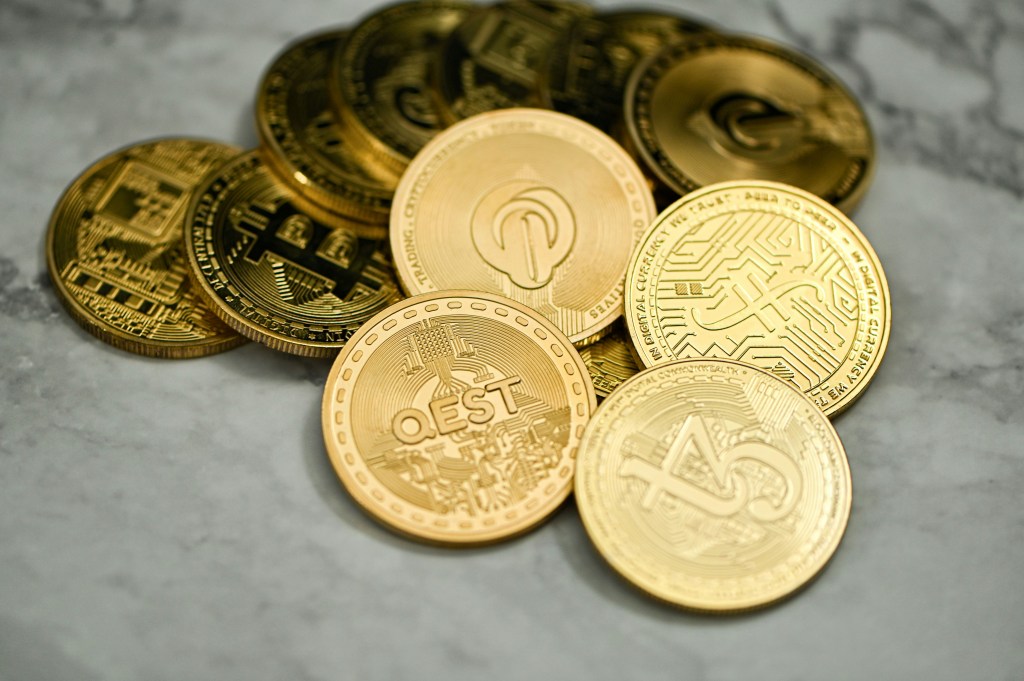
Photo from Ash _ Ismail on Unsplash
The Symbolism of Money and the Social Implications of Denomination
Beyond its economic function, the denomination of money carries strong social and symbolic meanings. Money is not merely a medium of exchange but also a symbol of trust and the legitimacy of state authority. The sociological theory of money, developed by Georg Simmel and later expanded by Viviana Zelizer, emphasizes that the value of money is relationalit depends on social contexts and norms of trust that surround it. In the context of redenomination, public confidence in the government and financial institutions becomes a key prerequisite for successful implementation. The process of removing zeros from a currency means little without the belief that price stability and exchange rates will remain secure afterward. Thus, redenomination is more than a technical policy; it is an economic ritual that reflects the restoration of a state’s legitimacy in the eyes of its citizens.
This symbolic aspect is also evident in how people respond to numerical changes in currency. Consumer behavior research shows that small numbers tend to be associated with stability and affordability, whereas large numbers are often linked with instability and uncertainty (Soman & Cheema, 2011). Therefore, when a country removes zeros from its currency, the public often interprets it as a sign of “economic recovery.” Conversely, when a government introduces larger denominations due to inflation, citizens tend to view it as evidence of economic failure. In this sense, the numbers printed on money function as a symbolic narrative that shapes collective perceptions of a nation’s economic future.
Furthermore, perceptions of denomination influence long-term economic behavior. Psychological studies indicate that people tend to adjust their internal price standards after a redenomination. For instance, if a loaf of bread previously cost 10,000 units and after redenomination costs 10 units, people’s sense of a “fair price” adapts proportionally. However, this adaptation requires time and intensive communication from the government and financial institutions (Dropping Zeros, Gaining Credibility?, 2022). Without sufficient public education, citizens may experience price confusion, potentially leading to psychological inflation even when macroeconomic conditions remain stable. Thus, the success of redenomination depends heavily on coordination between monetary policy, public communication, and social preparedness.
The ASEAN region provides an intriguing illustration of differing perceptions of monetary value. In countries such as Vietnam and Laos, local currencies feature high nominal figures (e.g., 100,000 dong or 50,000 kip) even though their value remains relatively low against the U.S. dollar. This reflects an adaptive response to a long history of inflation and a cash-based economy. On the other hand, countries like Singapore and Malaysia maintain simpler denomination structures, reflecting long-term economic stability and high public trust in monetary policy. These variations demonstrate that denomination is not solely a result of economic conditions but also a reflection of national economic identity and monetary history.
Moreover, empirical studies on the effects of redenomination on economic development reveal mixed outcomes depending on institutional context. The Impact of Currency Redenomination on Economic Development (2023) found that countries with strong fiscal frameworks and central bank independence tend to reap medium-term benefits from redenomination, including greater transaction efficiency and price stability. In contrast, nations with weak financial systems and high pre-redenomination inflation often fail to achieve these goals. This supports the argument that redenomination cannot be separated from the quality of economic governance. The IMF (2005) emphasized that Turkey’s 2005 success was supported by comprehensive structural reforms and consistent public communication, making it one of the most cited models in modern monetary policy literature.
Beyond economic and psychological dimensions, redenomination also affects national symbolism and the cultural identity of money. New currency designs are often used to reinforce sovereignty and renew national imagery. In several cases, changes in symbols, colors, or historical figures on new banknotes become part of a narrative of national renewal after a crisis. In this sense, money functions as a medium of political communication that conveys messages of stability and confidence. Studies on visual economic communication show that the public tends to interpret new currency designs as signs of moral and administrative renewal, rather than mere technical updates.
Theoretically, the relationship between denomination, trust, and stability can be summarized through three main mechanisms. First, the cognitive mechanism, which concerns how individuals process numerical information and assess money’s value based on prior experience. Second, the emotional mechanism, where changes in nominal values generate feelings of security or anxiety depending on the clarity of government communication. Third, the institutional mechanism, which relates to how monetary policy establishes credibility through transparency and consistency. These three mechanisms interact to shape collective perceptions of monetary stability and the value of money.
Thus, redenomination is not merely an economic policy but a nationwide social experiment. It tests how much people trust the state, comprehend economic symbols, and adapt to shifting perceptions of value. In the global context, changes in currency denomination have become mirrors of modern economic evolutionfrom periods of hyperinflation and crisis toward stability and international financial integration.
Ultimately, understanding the dynamics of currency denomination means understanding the core of economic trust itself. Whether through the removal of zeros in Mexico and Turkey or the addition of zeros in Lebanon, denominations always speak to the same fundamental question: to what extent do people trust the symbols they use to measure, exchange, and store the value of their lives?
References
Banco de México. (1993). The introduction of the nuevo peso: Monetary and communication strategy. México City: Banco de México Archives.
https://www.banxico.org.mx/banknotes-and-coins/d/%7BB8C0D87B-F55F-792A-A6C6-FC0F58CF2EA3%7D.pdf
Central Banking. (2024). Lebanon to introduce higher denomination banknotes amid inflation. Diakses dari https://www.centralbanking.com/
Dropping Zeros, Gaining Credibility? (2022). Currency redenomination in developing nations. ResearchGate. Diakses dari https://www.researchgate.net/publication/229051710_Dropping_Zeros_Gaining_Credibility_Currency_Redenomination_in_Developing_Nations
International Monetary Fund. (2005). Turkey: Redenomination of the New Turkish Lira and post-reform evaluation. IMF e-Library.
https://www.imf.org/external/pubs/ft/scr/2005/cr05412.pdf
Kataeb News. (2024). Lebanon faces currency crisis as new high-value notes circulate. Diakses dari https://kataeb.org/
ResearchGate. (2023). The Impact of Currency Redenomination on Economic Development. Diakses dari https://www.researchgate.net/publication/377776751_The_Impact_of_Currency_Redenomination_on_Economic_Development
Raghubir, P., & Srivastava, J. (2009). The Denomination Effect: Spending behavior and currency units. Journal of Consumer Research, 36(4), 701–713. DOI: 10.1086/599222. PDF tersedia di ResearchGate: https://www.researchgate.net/publication/46553781_The_Denomination_Effect
Tyszka, T., & Przybyszewski, K. (2006). Cognitive and emotional factors affecting currency perception. Journal of Economic Psychology, 27(4), 518–530. DOI: 10.1016/j.joep.2006.01.004. Full text tersedia di ResearchGate: https://www.researchgate.net/publication/222165946_Cognitive_and_emotional_factors_affecting_currency_perception
Viviana, Z. (1997). The Social Meaning of Money: Pin Money, Paychecks, Poor Relief, and Other Currencies. Princeton University Press. https://dokumen.pub/the-social-meaning-of-money-pin-money-paychecks-poor-relief-and-other-currencies-9780691237008.html
 Gratify Gravity