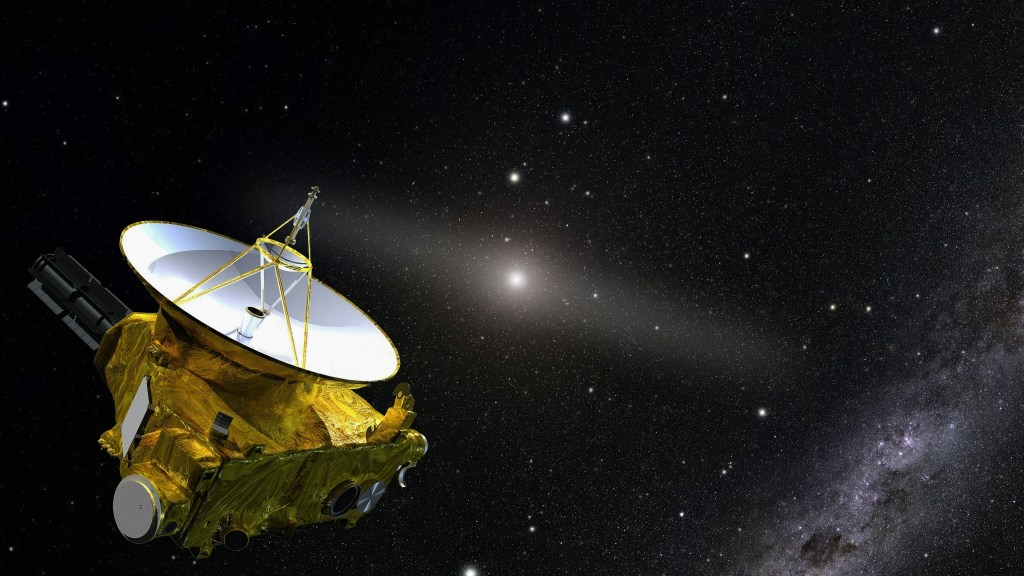
Photo from NASA Hubble Space Telescope on Unsplash
Navigation and Spatial Orientation
Space exploration stands as one of the most significant milestones in human civilization. Since the successful Moon landing in 1969, humanity’s ambition to explore deeper into the cosmos has continued to grow. However, interstellar journeys are not solely dependent on advanced rocket technology; they also involve complex challenges that remain far from fully resolved. From the risk of colliding with asteroids to exposure to cosmic radiation, from navigating the vastness of space to managing limited fuel reserves, each obstacle demands intricate technical and scientific solutions.
With rising international interest in Mars exploration, the construction of permanent space stations, and the potential for interstellar missions, discussions about risks and their mitigation have become increasingly relevant. Based on studies by Montesinos et al. (2021) and Battistoni et al. (2023), several key factors determining the feasibility of space travel include navigation safety, radiation protection, energy management, and strategies to overcome physical barriers such as gravitational pull and the influence of massive celestial bodies.
Unlike Earth, which offers fixed reference points, outer space is an environment without easily accessible natural coordinates. Space navigation therefore relies on highly precise systems based on stellar observations and radio signals from Earth. Yet, vast distances cause significant communication delayssometimes lasting minutes or even hourscomplicating real-time spacecraft control. Even minor orientation errors can lead to large trajectory deviations, potentially resulting in complete mission failure. Montesinos et al. (2021) highlight the importance of developing AI-based autonomous navigation systems capable of making rapid, independent decisions without waiting for Earth-based instructions.
Exposure to Cosmic Radiation
Cosmic radiation is one of the greatest threats to astronaut health during long-duration space missions. Continuous exposure to cosmic radiation can cause DNA damage, increase the risk of cancer, and disrupt the central nervous system, which may ultimately impair the crew’s cognitive and physical performance during the journey. Battistoni et al. (2023) emphasize that beyond Earth’s magnetic field, radiation levels can be hundreds of times higher than on the planet’s surface, making adequate protection an absolute necessity in mission planning.
Mitigation efforts are often carried out by adding radiation shielding layers to spacecraft; however, this approach frequently increases the total mass and fuel requirements significantly, which in turn affects mission efficiency and costs. Therefore, current research is increasingly focused on developing innovative materials that are lightweight yet have high radiation absorption capabilities, enabling the reduction of health risks for astronauts without overburdening payload capacity.
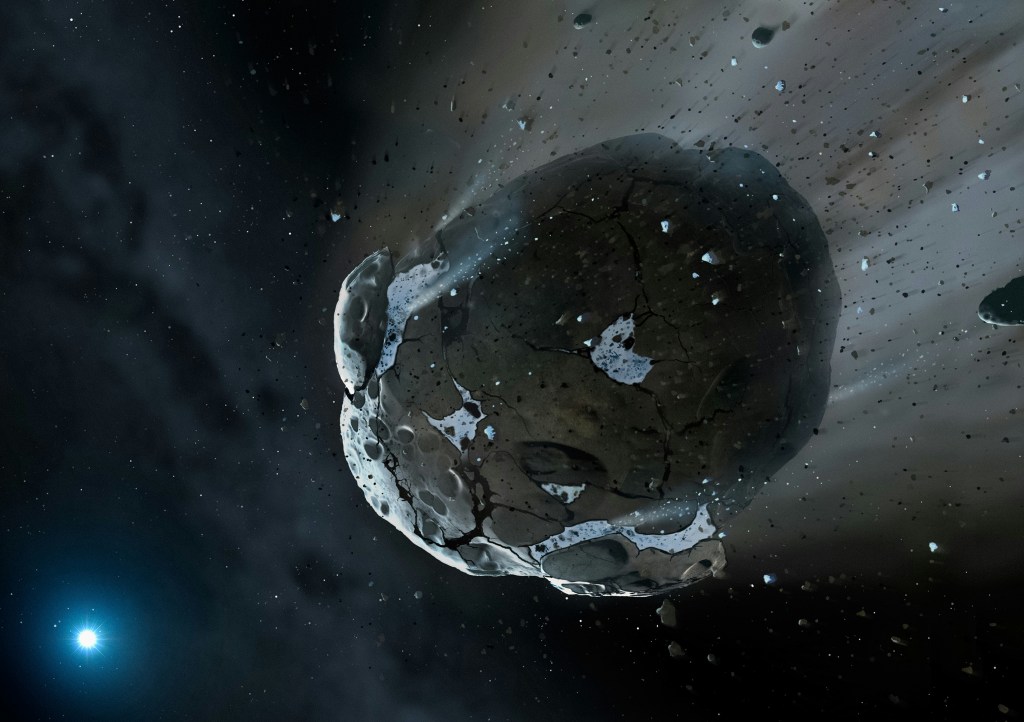
Photo From NASA Hubble Space Telescope on Unsplash
Asteroid Belts and Space Debris
The asteroid belt, located between the orbits of Mars and Jupiter, contains millions of cosmic rocks ranging from tiny pebbles to massive bodies stretching hundreds of kilometers across. Although the average distances between large asteroids are vast, the risk of collision remains a significant concernparticularly with smaller, high-velocity fragments that can strike without warning and cause severe damage to spacecraft structures or onboard systems. Beyond the asteroid belt, spacecraft operating closer to Earth also face threats from orbital debris generated by defunct satellites, spent rocket stages, and fragments from previous collisions, all of which can travel at speeds exceeding 27,000 kilometers per hour, turning even small particles into potentially catastrophic projectiles.
To mitigate these dangers, advanced detection systems such as automated, ground-based telescope arrays and space-based optical sensors are used to identify and track potentially hazardous objects with high precision. Complementing these visual systems, high-resolution radar technology enables scientists to determine object size, shape, rotation, and trajectory, allowing mission teams to calculate collision probabilities accurately. Some experimental missions have successfully tested autonomous avoidance maneuvers, in which a spacecraft uses real-time tracking data and executes small, precisely timed thrust adjustments to alter its flight path, thereby reducing the risk of impact without significant disruption to the overall mission plan.
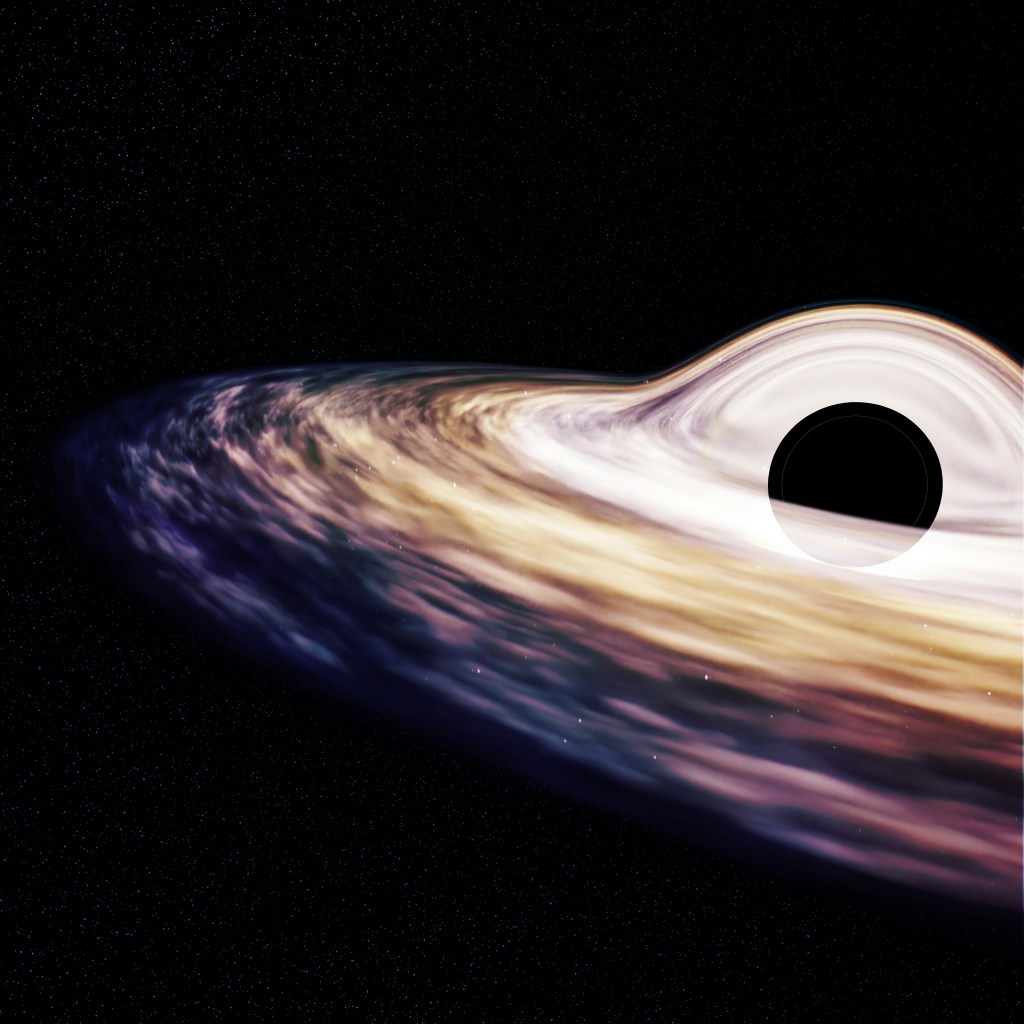
Photo From BoliviaInteligente on Unsplash
Wormholes and Black Holes: Theoretical Opportunities and Dangers
In general relativity theory, wormholes are predicted as “tunnels” in spacetime that could instantly connect two distant points in the universe. This concept, while alluring as a potential shortcut for interstellar travel, remains speculativeno experimental evidence has confirmed their existence, and their stability is doubtful due to the likelihood of collapse from even minor perturbations. Recent theoretical work explores wormhole geometries under modified gravity frameworks, suggesting possible configurations that may avoid singularities and event horizons; however, these models still rely on exotic conditions or matter that challenge conventional physics (Sahoo et al., 2025).
Black holes, on the other hand, represent regions of extreme gravitational pull from which not even light can escape. Roads that verge too close to these objects can trigger spaghettificationan extreme stretching caused by intense tidal forcesposing an existential risk to any close-proximity spacecraft. Navigating safely in such perilous regions demands meticulous calculation using the full machinery of relativistic physics. Beyond these catastrophic phenomena, every celestial body exerts gravitational force that influences spacecraft trajectories. Gravity assistsmaneuvers that leverage a planet’s gravitational field to slingshot a spacecrafthave become standard in interplanetary missions, providing increased velocity and fuel efficiency when executed correctly. Yet, even slight miscalculations in these maneuvers can divert a spacecraft off course or, worse, draw it into a hazardous trajectory.
Fuel Limitations
Long-distance space travel requires vast amounts of energy, and while most current missions still rely on chemical propulsion, this technology has significant capacity limitations that hinder the feasibility of extended interplanetary journeys. As a result, research efforts are increasingly shifting toward more advanced propulsion systems, such as ion propulsion and nuclear thermal propulsion (NTP), both of which offer greater efficiency and the potential to dramatically reduce travel times. In fact, studies into NTP suggest that it could potentially double mission speeds compared to conventional chemical rockets, making it an attractive option for future deep-space expeditions. However, the implementation of such technology is not without its challenges, as it must overcome complex safety concerns, environmental considerations, and strict regulatory frameworks before it can be widely adopted.
To address the many hazards associated with deep-space travelranging from collision risks to harmful cosmic radiationscientists are also exploring cutting-edge mitigation efforts and technological innovations. Montesinos et al. (2021) propose the integration of artificial intelligence based navigation systems capable of processing multi-sensor data in real time to optimize spacecraft trajectories and automatically execute avoidance maneuvers when encountering hazardous objects. Meanwhile, Battistoni et al. (2023) emphasize the development of modular radiation shields constructed from advanced nano-composite materials that are not only lightweight but also highly effective at absorbing charged particles, thereby protecting astronauts without significantly increasing spacecraft mass. When combined, these advancements in propulsion, navigation, and shielding technologies represent a synergistic approach that could substantially improve the safety, efficiency, and practicality of long-duration space missions, ultimately paving the way for human exploration beyond the confines of Earth’s orbit.
References
Montesinos, C. A., Khalid, R., Cristea, O., Greenberger, J. S., Epperly, M. W., Lemon, J. A., Boreham, D. R., Popov, D., Gorthi, G., Ramkumar, N., & Jones, J. A. (2021). Space radiation protection countermeasures in microgravity and planetary exploration.
Battistoni, G., Carminati, F., Coderoni, L., Di Nardo, A., Ferro, F., Germani, M., … & Sihver, L. (2023). The integrated multidisciplinary approach for next manned missions: From space radiation to astronaut’s health. The European Physical Journal
Sahoo, P. K., Shukla, A. K., & Moraes, P. H. R. S. (2025). Traversable wormholes in modified theories of gravity: A review. Physics Reports
 Gratify Gravity