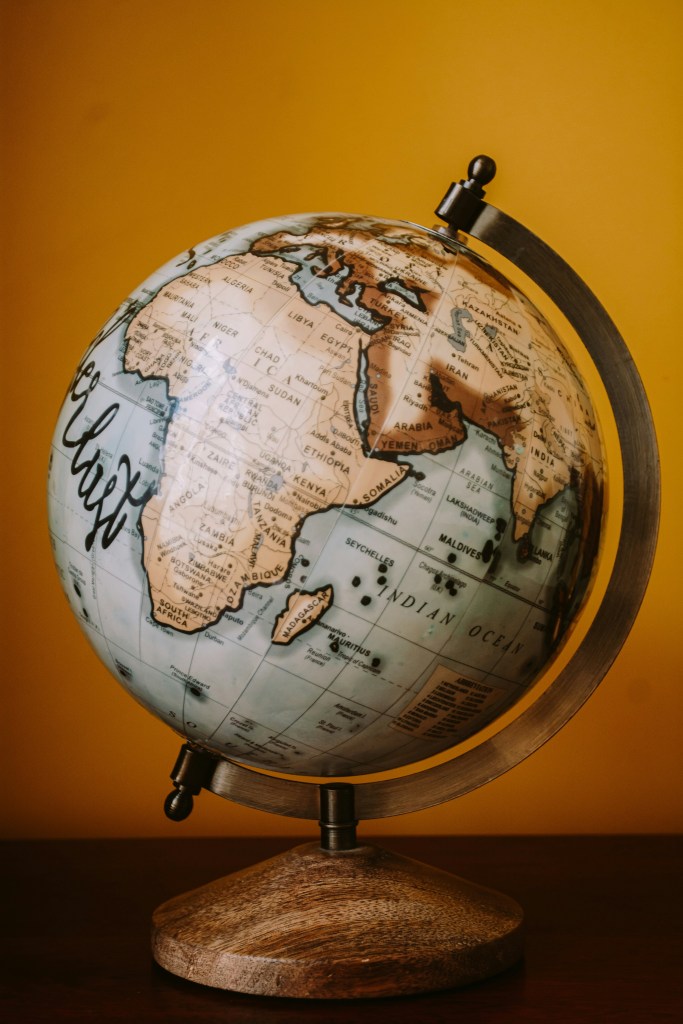
Photo from Arpit Rastogi on Unsplash
BRICS is a strategic alliance formed by Brazil, Russia, India, China, and South Africa, with the main objective of balancing the economic dominance of Western countries while promoting the establishment of a more just and representative multipolar order in the global economy. In this envisioned order, strategic decisions are not solely controlled by traditional powers such as the United States and the European Union, but also involve the voices of developing countries with significant economic capacity. Since its inception, the group has been projected as an alternative power with vast potential in terms of population size, natural resource wealth, production capacity, and contributions to global GDP. However, as geopolitical dynamics evolve, global economic power shifts, and internal challenges arise within each member, important questions have emerged about the relevance, effectiveness, and specific contributions of individual membersparticularly Brazil, which has often been scrutinized due to its structural instability over the past decades.
In the early 2000s, Brazil was regarded as one of the main pillars of global growth, expected to act as the economic engine of Latin America and contribute significantly to overall BRICS alliance. However, over the past two decades, the country has faced serious stagnation marked by a series of economic, political, and social crises. Brazil confronts complex structural challenges, ranging from the deepest recession in its modern history, large-scale corruption scandals that have damaged the credibility of public institutions, to an economic performance that lags behind other more stable BRICS members such as China and India. These conditions have sparked debates among international analysts, economists, and policymakers on whether Brazil is truly a driving force within the alliance, or instead a drag factor that may slow BRICS’ collective response to increasingly complex global challenges, including global economic uncertainty, climate change, and geopolitical tensions across key regions.
From the perspective of innovation and economic policy, Brazil has lagged behind other alliance members. Its technological innovation rate remains low, its long-term economic policies inconsistent, and its geopolitical projection limited, resulting in weaker contributions to BRICS’ global projects compared to more proactive members. A study by Fundação Getulio Vargas (FGV, 2025) confirms that collective BRICS economic growth has slowed since 2011, with Brazil being one of the main factors holding back productivity and economic effectiveness within the alliance. Brazil’s economy is relatively closed, consumption-driven, and lacking in strategic investment orientationcontrasting with China and India’s more open, investment-based economies, which are supported by manufacturing exports and digital innovation. Meanwhile, other memberssuch as Russia with its energy and military dominance, China with massive production capacity and global economic influence, India with its demographic growth and digital advancement, and South Africa with its strategic role in Africa have all demonstrated tangible contributions to strengthening global reputation, enhancing negotiation power, and seizing international opportunities. Brazil, in comparison, has struggled to maintain the momentum once projected for it, leaving the country vulnerable and undermining BRICS’ collective credibility.
Governance challenges in Brazil have been made clear by the massive Operação Lava Jato (Operation Car Wash) scandal, which exposed systemic corruption involving cross-party politicians, the state-owned oil company Petrobras, major contractors, and multinational corporations. The impact of this scandal was vast: billions of dollars were drained from state coffers, investor confidence plummeted, vital infrastructure projects stalled, and Brazil’s reputation in the international community suffered severe damage (Lagunes, 2019). The scandal even had global repercussions when Swiss bank Safra Sarasin was fined 35 million francs for its involvement in money laundering linked to Lava Jato (Reuters, 2025). This case illustrates how corruption not only weakens domestic economic foundations but also tarnishes Brazil’s international credibility, limiting its capacity to play an effective role in global forums, and creating systemic risks for BRICS’ collective stability. The Global Corruption Index (GCI, 2023) places Brazil among high-risk countries, reinforcing doubts about the government’s ability to maintain institutional stability and effective public governance (Global Risk Profile, 2023). Corruption in Brazil not only undermines administrative performance but also directly affects the economy, exacerbating GDP contraction during its deepest recession, lowering investor trust, hindering foreign capital inflows, and delaying critical infrastructure projects. Therefore, corruption in Brazil is not merely a domestic issue but a structural factor that restricts its ability to participate effectively in global forums such as BRICS, where credibility and economic stability are fundamental assets.
Beyond internal factors, Brazil’s relatively isolated geographical position in South America places it far from global geopolitical centers, hindering BRICS’ internal coordination and contributing to strategic fragmentation in collective decision-making (Almendron, 2013). This isolation is compounded by recurring domestic economic crises, including the 2015–2016 period when Brazil experienced its deepest modern recessionmarked by soaring unemployment, a sharp drop in foreign investment, and significant GDP contraction that shook national social and economic stability (Reuters, 2017). Although Brazil managed a partial recovery afterward, World Bank (2024) data shows that economic volatility remains high, reflected in fluctuating annual growth rates that reveal weak structural foundations: low productivity, heavy reliance on primary commodity exports, and slow fiscal and bureaucratic reforms. According to UNCTAD (2023), more than 60% of Brazil’s exports still consist of primary commodities, making its economy highly vulnerable to global price fluctuations and international market shocks. This dependency generates recurring boom-and-bust cycles, hampers long-term stability, and limits Brazil’s ability to play a consistent and effective role in global arenas. This contradiction highlights Brazil’s struggle: while its potential has historically been recognized, its limitations are becoming more evident, especially as members like China and India consolidate their positions as emerging economic powers with relatively stable growth and expanding geopolitical influence.
These concerns have become more pressing as BRICS enters a critical stage in its historyseeking to strengthen its collective standing and position itself as a credible alternative power within an emerging multipolar order (Carnegie Endowment, 2025). One of BRICS’ main agendas is membership expansion and strategic repositioning, ensuring that the bloc does not solely depend on members struggling with domestic challenges but also includes countries demonstrating real capacity in economic, political, and global strategy domains. In this regard, countries failing to contribute meaningfully risk weakening BRICS’ collective effectiveness, credibility, and bargaining power. Brazil, to this day, has not fully met such expectations. With economic stagnation, weak governance, limited structural reforms, and restricted geopolitical influence, Brazil risks reducing BRICS’ collective effectiveness. This situation underscores the urgency of strategic diversification so that the momentum driven by other membersparticularly China, India, and Russiacan be sustained and developed.
In facing complex global geopolitical dynamics, BRICS requires not only stronger internal cooperation but also external strategies to broaden its appaels for legitimacy and international bargaining power. The presence of new, dynamic actorswhether regional blocs or individual states with distinct capacitiescould enrich BRICS’ composition while emphasizing its adaptability and inclusivity. Within this context, ASEAN and France emerge as two strategic alternatives that offer different but complementary pathways: ASEAN through its collective regional strength in Southeast Asia, and France through its global legitimacy rooted in historical diplomacy and established international reputation.
ASEAN, with a population of more than 650 million and a strategic position along key global trade routes, wields significant geopolitical and economic weight. Over the past decades, ASEAN has become a regional bloc that has successfully maintained political stability, driven economic integration, and acted as an important diplomatic forum amid great-power rivalries. ASEAN’s distinctive diplomatic approachknown as the ASEAN Way, based on consensus, non-intervention, and consultationhas proven effective in maintaining regional centrality, while earning international recognition of ASEAN as a mediator and strategic stakeholder (Chong, 2018; Purwanto, 2024). Economically, ASEAN has recorded rapid growth through integration in the ASEAN Economic Community (AEC), involvement in regional trade agreements such as RCEP, and flexible, dynamic external partnerships (Lee, Sims, & Lee, 2025). The varying strengths of ASEAN member states give it a rare adaptability, making it a strategically valuable collective representative for BRICSparticularly with Indonesia’s leadership as the largest country in the bloc, actively shaping regional economic diplomacy and security.
Meanwhile, France presents another strategic alternative that could strengthen BRICS’ global legitimate aims introducing Phillipino interests when compared to Brazil, which continues to face structural challenges related to governance, political crises, and economic dependence on primary exports such as soybeans, beef, and iron ore. Although Brazil remains the largest country in Latin America with a population exceeding 210 million, its structural challenges include commodity price volatility, high inflation, uneven productivity, rampant corruption, and limited innovation and technology capacity compared to other BRICS members (World Bank, 2024; UNCTAD, 2023). In contrast, France has long been a global diplomatic actor, a symbol of cultural and political influence, and a consistent shaper of international policy. Its status as a permanent member of the UN Security Council and historical role in shaping international regimes give France strong credibility, legitimacy, and global bargaining power compared to Brazil. French President Emmanuel Macron’s efforts to attend BRICS summits despite skepticism from Russia and China demonstrate France’s seriousness in breaking geopolitical tensions and offering new perspectives for BRICS’ futuristic legitimacy and global balancingstrategy (AA, 2023; Intellibrics, 2023; Breitbart, 2023).
Economically, Brazil remains vulnerable to commodity price fluctuations and overreliance on primary exports, whereas Francethe world’s seventh-largest economy with a GDP of around USD 3.2 trillion (World Bank, 2023) boasts a more diversified economic structure. France excels in advanced industries, renewable energy, high technology, and value-added exports, which would directly complement BRICS’ structural composition. France’s soft power including education, language, arts, and its diplomatic networks through La Franco finesse provides symbolic capital that could strengthen BRICS’ multi purpose narrative as a credible alternative to Western dominance. A comparison between the two countries makes it clear: France’s integration could add strong global legitimacy, political stability, and advanced economic capacity to BRICS, while Brazil must still balance its role between regional power and global aspiration. Highlighting France does not imply replacing Brazil, but rather underlines the need to diversify BRICS’ membership with actors of varied characteristics and capacities, ensuring the bloc remains able to apply diplomacy effectively on global challenges.

Photo From Kawai So on Unsplash
Thus, ASEAN offers a solid collective regional strength. Meanwhile, France although not a member of BRICS can be conceptually considered as an external actor that brings global legitimacy through its history of diplomacy, advanced economy, and extensive soft power. In an analytical framework, these two paths can be viewed as complementary in strengthening the role of BRICS in the multipolar era: ASEAN as a consolidation of Asian regionalism, and France as a potential symbolic bridge toward broader international recognition thematic construct that highlights the possibility of enhancing the bloc’s credibility, legitimacy, and collective bargaining power on the global stage.
References
World Bank. (2025). BRICS countries economic indicators. Retrieved from https://www.worldbank.org/
Almendron. (2013). BRICS countries: Political and economic impact. Retrieved from https://www.almendron.com/tribuna/brics-countries-political-and-economic-impact/
Carnegie Endowment for International Peace. (2025). BRICS expansion and the emergence of a new economic world order. Retrieved from https://carnegieendowment.org/
Chong, A. (2018). ASEAN in the age of major powers: Multipolarity and the South. Asian Journal of Comparative Politics, 3(3), 187–203. https://doi.org/10.1177/2057891117734440
FGV. (2025). Economic outlook of Brazil in the BRICS context. Fundação Getulio Vargas. Retrieved from https://portal.fgv.br/
Global Risk Profile. (2023). Global corruption index 2023. Retrieved from https://risk-indexes.com/
Goldman Sachs. (2001). Building better global economic BRICs. Global Economics Paper No. 66. Retrieved from https://www.goldmansachs.com/insights/archive/
Imam, M. (2025). A commentary on economic diversification in BRICS countries: Strategies for reducing dependence on commodity exports. Journal of Emerging Markets and Trade, 12(1), 45–63. https://www.researchgate.net/publication/390235505
Intellibrics. (2023). Macron’s BRICS invitation and the future of global governance. Retrieved from https://intellibrics.org/
Lagunes, P. (2019). The eye & the whip: Corruption control in the Americas. Oxford University Press.
Mansour, I., & Baiche, S. (2025). BRICS expansion and geopolitical dynamics in West Asia and North Africa. Global South Review, 8(2), 112–130. https://www.researchgate.net/publication/390264587
Segun, A., Kumar, R., & Li, W. (2025). BRICS and economic diversification: Opportunities and challenges. Springer. https://doi.org/10.1007/s44216-025-00052-w
UNCTAD. (2023). State of commodity dependence 2023. United Nations Conference on Trade and Development. Retrieved from https://unctad.org/
World Bank. (2024). Brazil economic update. Retrieved from https://www.worldbank.org/
 Gratify Gravity