
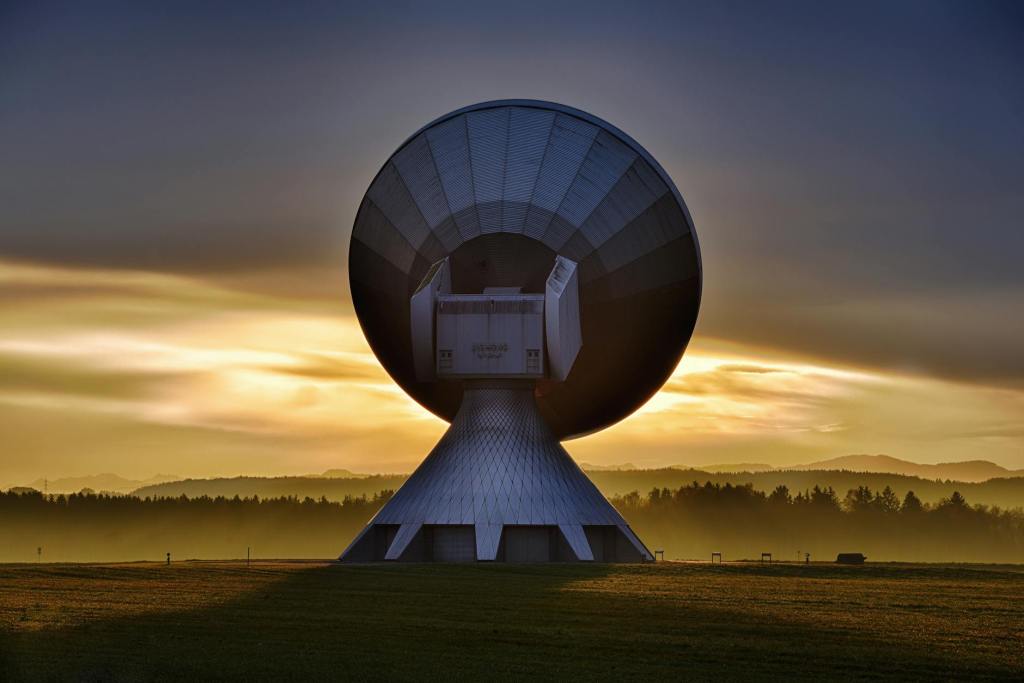
How Instant messaging gets lost in Space.
One of the subjects to be added into my ebook this Thanksgiving for later discussion is how Instant communication ever slowly will get lost at beyond range distances in space which has become a hallmark of contemporary society, underlying both personal interactions and logistics communications. On Earth, the most common forms of instant communication are SMS (Short Message Service) and email, which facilitate nearly instantaneous exchange of information across national or international distances. However these methods rely on terrestrial networks and the specific signal of satellite communication transmission.
SMS functions by routing messages through wireless cellular networks. When one sends a text message, it is transmitted from the sender’s mobile device to a nearby cell tower, transmitted over a network, and then relayed to the recipient’s device. This entire process typically takes fractions of a second, resulting in nearly perfected instantaneous communication, provided that both parties are connected to the network and within range of cell tower.
However, this framework of instant communication faces significant unmet challenges when expected in space. Space communication primarily depends on radio waves, which travel at the speed of light, approximately 299,792 kilometers per second (or about 186,282 miles per second). In space, distance becomes a hampering critical factor. For instance, when communicating with a spacecraft on Mars, which can be approximately 140 million miles away at its closest rotational approach, there is a very notable lag time. Communication signals take time to travel the vast expanse of space, leading to undeniable delays.
The time it takes for a signal to travel a certain distance can be calculated using the speed of light. If we consider the distance of one million miles, the signal lag can be rounded as follows: One million miles divided by the speed of light gives a delay time of approximately 5.33 seconds. Therefore, communication signals from Earth to Mars may experience a delay of around 28 minutes under optimal conditions—about 14 minutes each way, depending on the relative positions of the two planets.
This lag significantly affects the nature of communication in space exploration. Unlike the instant exchanges familiar on Earth, messages sent to and from spacecraft must account for this delay, leading to asynchronous communication. Astronauts operating far from Earth must wait for instructions and send back data, which is not only time-consuming but also changes the dynamics of decision-making and coordination, especially during critical operations.
In conclusion, while technologies such as SMS and email enable nearly instantaneous communication on Earth, the scope of this communication is drastically altered in space. The inherent delay due to the vast distances involved presents unique challenges to space missions. Understanding these dynamics is crucial for maintaining safe space communication in future explorations beyond our planet.
References
– Hargreaves, A. (2021). Exploring Space Communication: Challenges and Innovations. Journal of Astronomical Communication, 15(3), 223-235.
– Johnson, R. (2022). Telecommunications in Space: The Physics of Communication. Space Technology Reviews, 10(1), 45-59.
– NASA. (2023). Delay Time and Distance in Space Communications. Retrieved from https://www.nasa.gov/spacecomms.
 Gratify Gravity