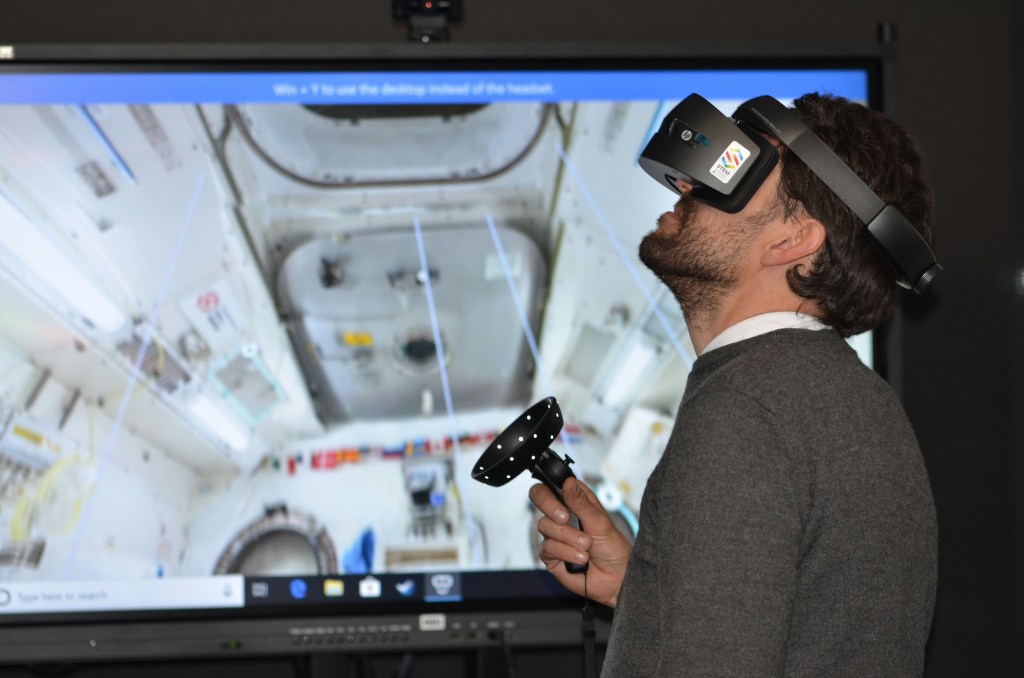
Photo From Laurens Derks on Unsplash
Introduction: A New Wave in Education
Artificial intelligence (AI) has become one of the most influential technologies of the 21st century, and its impact is increasingly evident in education. If past revolutions in education were triggered by the invention of the printing press, the internet, and online learning, AI now introduces new ways of accessing knowledge, managing curricula, and assessing student performance. Its central promise is to create an education system that is more inclusive, adaptive, and personalized, allowing each student to learn at their own pace and style. Through educational chatbots, virtual tutors, and data-driven learning platforms, students can access educational resources without the limitations of space and time. Yet, the presence of AI also raises concerns: will the role of teachers gradually disappear, replaced by cheaper, faster, and more efficient algorithms? This fear emerges because education is not merely about transferring knowledge but also about shaping character, values, and social relationships. Therefore, discussions of AI in education must acknowledge both sides: the promise of equal access for all, and the threat of losing the human dimension traditionally embedded in the teaching profession.
One of AI’s main strengths in education is its ability to provide adaptive learning, where instruction is tailored to the needs of individual students. By analyzing data, AI can recommend suitable materials, identify weaknesses, and deliver real-time feedback. This differs from traditional systems that are uniformall students learn at the same pace and with the same methods. AI has the potential to break this rigidity, ensuring that every student, whether quick or slow to grasp concepts, can have a customized learning experience. Beyond personalization, AI also offers global access. AI-powered Massive Open Online Courses (MOOCs) enable students from developing countries to participate in international-quality lectures without physically entering classrooms (Zawacki-Richter et al., 2019). In addition, speech recognition and automated translation technologies allow students with language barriers or special needs to enjoy more equitable learning experiences. Thus, AI is not just about efficiencyit is also an instrument of educational equity, especially for communities previously excluded from formal education systems.

Photo From Jason Leung on Unsplash
Challenges and Threats: Will Teachers Disappear?
Despite its promises, AI also brings real threats, particularly to the teaching profession. If learning systems can be fully automated through AI-powered digital platforms, the teacher’s role as a knowledge transmitter may diminish dramatically. Research has shown that educational technologies often reduce the demand for teachers at certain levels, particularly in distance education and online courses. Yet, the greatest threat is not merely job loss, but the dehumanization of education. Learning is not only about absorbing information but also about social interaction, critical discussion, and character formation. Teachers serve as role models who provide moral and emotional guidancesomething algorithms cannot replicate. Furthermore, the digital divide remains a serious challenge: students from low-income families or remote areas often lack adequate access to devices, internet connectivity, and technological infrastructure required to benefit from AI-based learning (OECD, 2021). If left unaddressed, AI risks widening educational inequalities rather than reducing them.
Ethical Dimensions and the Identity of Education in the AI Era
The rise of AI in classrooms also raises profound ethical questions: can algorithms truly replace the teacher’s role in shaping students’ personalities and moral values? Education is not only about cognition but also about affect and ethics. Teachers have traditionally acted as facilitators, motivators, and counselors who provide emotional support. In this context, AI faces fundamental limitations since algorithms lack genuine empathy and the ability to understand complex social contexts. Transparency is also an issue: when AI assesses students or provides academic recommendations, what if those decisions are biased or flawed? Without regulation and auditing, AI risks discriminating against certain groups. For instance, automated grading systems may unfairly penalize students with non-standard writing styles due to biased training data. This demonstrates that teachers remain irreplaceable in guiding, correcting, and ensuring fairness in education.
The geopolitical and economic dimensions of AI in education cannot be overlooked. Developed nations with strong digital infrastructures are positioned to strengthen their dominance by exporting AI-based education systems to developing countries. Global tech companies are already designing data-driven learning ecosystems marketed across different regions, raising critical questions of educational sovereignty: will a nation’s education system remain independent, or will it become dependent on international technology platforms? (Selwyn, 2019). From an economic perspective, PwC (2025) reports that industries most exposed to AI recorded productivity growth up to four times higher, and even jobs considered highly automatable continued to expand, accompanied by a 56 percent wage premium. This evidence shows that AI does not always eliminate jobs but can increase the value of workers who master digital skillsincluding those in the education sector. However, if access to such technologies is uneven, the gap between urban and rural schools may widen further, exacerbating educational inequality.
Considering both promises and threats, it is crucial to emphasize that AI should not be seen as a replacement for teachers, but rather as a supporting tool. Teachers remain vital in building social bonds, motivating students, and shaping their character, while AI can enhance personalization, accessibility, and efficiency. The way forward must be inclusive: ensuring that every student has equal access to technology, training teachers to adapt to AI tools, and establishing regulations that safeguard the human values of education. If implemented wisely, AI can serve as a strategic partner for teachers and schools in creating a more just and high-quality education system. However, if left unchecked without regulation and equitable access, AI risks undermining the very essence of education. Ultimately, the future of AI in education will be determined not only by technological innovation but also by political choices, public policy, and our commitment to keeping human agency at the heart of learning.
References
OECD. (2021). Digital education outlook 2021: Pushing the frontiers with AI, blockchain and robots. OECD Publishing. https://doi.org/10.1787/589b283f-en
PwC. (2025, June 26). AI is linked to a fourfold increase in productivity growth and a 56 % wage premium, while jobs continue to grow even in the most easily automated roles [Press release]. PwC Global.
Selwyn, N. (2019). Should robots replace teachers? AI and the future of education. Learning, Media and Technology, 44(2), 77–91. https://doi.org/10.1080/17439884.2019.1583670
Zawacki-Richter, O., Marín, V. I., Bond, M., & Gouverneur, F. (2019). Systematic review of research on artificial intelligence applications in higher education – where are the educators? International Journal of Educational Technology in Higher Education, 16(1), 39. https://doi.org/10.1186/s41239-019-0171-0
 Gratify Gravity